UNL Education & Research Division™

Plain-language learning library

I do not understand this yet.

Start here when a lab result, symptom, diagnosis, medical word, or research article feels confusing. This department explains health information in plain language before you decide what to do next.

Educational resource only. This library does not diagnose, replace medical care, or provide individualized medical advice.

Choose a learning path

Start with the question you have today.

Understanding Your Labs

Lab results are clues, not the whole story.

Labs are most useful when they are viewed with symptoms, trends, medications, timing, and clinical context. A single result rarely explains everything by itself.

What is CRP?

CRP is an inflammation marker. It can rise with infection, autoimmune activity, injury, and other inflammatory stressors.

Ask: Is this new, rising, falling, or matching my symptoms?

What is ESR?

ESR, sometimes called sed rate, is another inflammation marker. It can move more slowly than CRP.

Ask: Does this trend matter with my CRP and symptoms?

What is ANA?

ANA is an autoimmune screening test. A positive result may lead to more specific testing, but it does not diagnose alone.

Ask: What was the titer, pattern, and follow-up plan?

Thyroid Antibodies

Thyroid antibodies can show immune activity involving the thyroid, even when thyroid hormone numbers look normal.

Ask: Should thyroid labs and symptoms be monitored over time?

Ferritin

Ferritin reflects iron storage, but it can also be affected by inflammation. Low ferritin can contribute to fatigue.

Ask: Is this low, high, or possibly influenced by inflammation?

Vitamin D

Vitamin D supports bone, immune, and muscle health. Low levels are common and worth discussing with a clinician.

Ask: What range are we aiming for and how will we recheck it?

CBC

A CBC looks at white blood cells, red blood cells, hemoglobin, hematocrit, and platelets.

Ask: Which part of the blood count changed and why might that matter?

CMP

A CMP checks kidney function, liver enzymes, electrolytes, glucose, protein, and other chemistry markers.

Ask: Are any values trending outside my usual baseline?

A1C

A1C estimates average blood sugar over time. It is one way clinicians screen or monitor blood sugar patterns.

Ask: Does this match my symptoms, medications, and fasting glucose?

Reference Ranges

Reference ranges show what is typical for many people, not what is always ideal or normal for one patient.

Ask: Is this normal for the range, normal for me, or changing over time?

Related Markers

Related labs can tell a clearer story together than alone, especially when inflammation, thyroid, anemia, or immune activity overlap.

Ask: Which results should be interpreted together?

Understanding Autoimmune Disease

Autoimmune disease can be confusing because the pattern is not always linear.

Symptoms can flare, calm down, move, overlap, or change intensity. Education helps patients name patterns without assuming every symptom has the same cause.

What is autoimmune disease?

Autoimmune disease happens when the immune system mistakenly targets the body's own tissues or systems.

Inflammation Explained

Inflammation is part of the body's response to stress, injury, infection, or immune activity. Too much or persistent inflammation can become a problem.

Why Symptoms Change

Symptoms may change with sleep, stress, infection, hormones, weather, exertion, treatment timing, and recovery capacity.

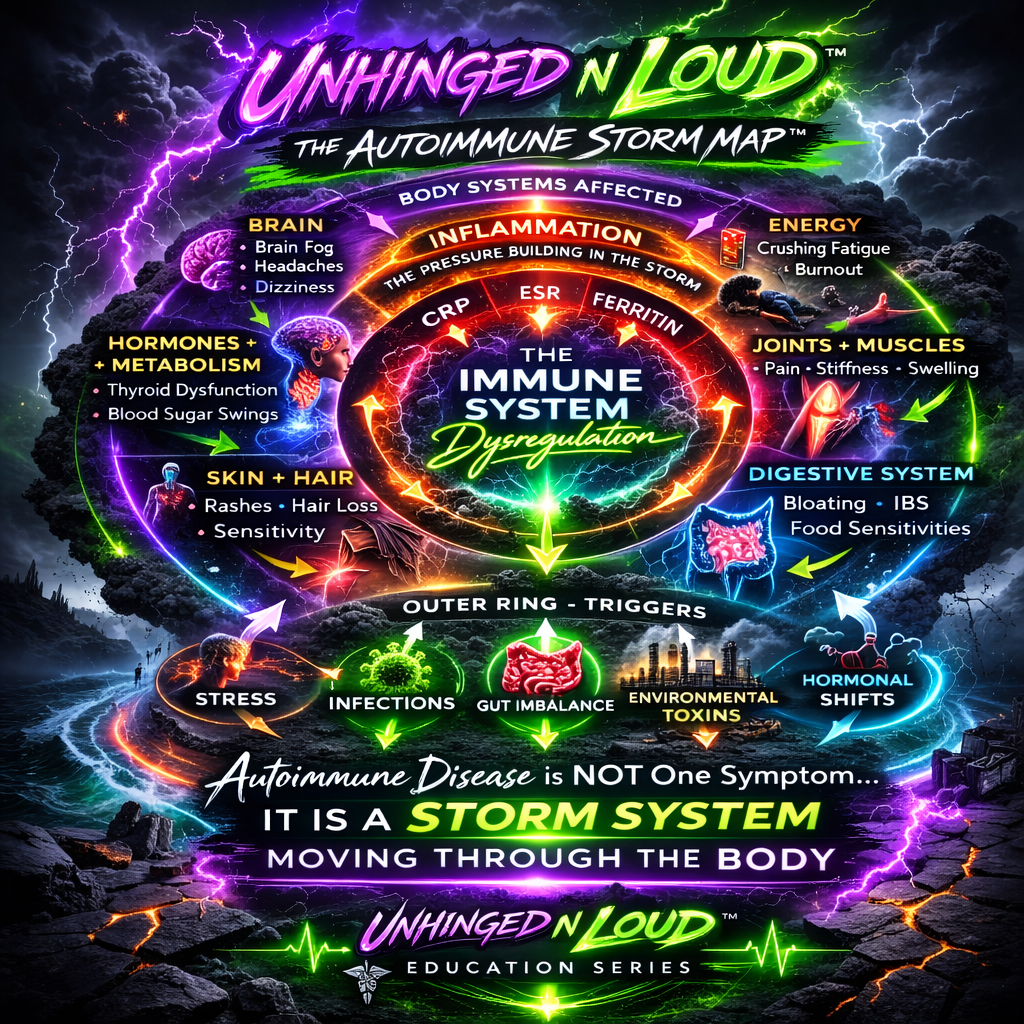
Autoimmune Storm Map™

A Headquarters framework for noticing flare inputs, body signals, recovery clues, and repeating patterns.

Symptom Clusters

A symptom cluster is a group of symptoms that appear together or around the same time, helping patients describe patterns more clearly.

Common Misconceptions

Autoimmune symptoms are not always visible, and normal labs do not automatically mean symptoms are not real.

Symptoms & Body Systems

Start with what you feel. Then learn the language around it.

Fatigue

Fatigue can involve low energy, heavy limbs, poor recovery, sleep that does not restore, or symptoms after exertion.

Brain Fog

Brain fog can affect memory, focus, word-finding, processing speed, and the ability to manage tasks.

Joint Pain

Joint pain may involve swelling, stiffness, warmth, limited range of motion, or pain that changes throughout the day.

GI Symptoms

Digestive symptoms can include nausea, bowel changes, pain, reflux, bloating, appetite changes, or food sensitivity patterns.

Neurological Symptoms

Neurological symptoms may include numbness, tingling, dizziness, headaches, weakness, balance changes, or sensory changes.

Skin Symptoms

Skin can show rashes, swelling, hives, flushing, sensitivity, wounds, color changes, or sun reactions.

Thyroid

Thyroid changes can affect energy, temperature, hair, skin, heart rate, weight, mood, and menstrual patterns.

Hormones

Hormonal shifts can influence inflammation, sleep, pain, migraines, fatigue, mood, and flare timing.

Medical Terminology

Plain-language definitions for words patients see everywhere.

Acute

New, sudden, or short-term.

Chronic

Long-term, recurring, or ongoing.

Flare

A period when symptoms increase, return, or become harder to manage.

Remission

A period when disease activity or symptoms are reduced or controlled.

Differential Diagnosis

The list of possible explanations a clinician is considering.

Contraindication

A reason a treatment, medicine, or test may not be safe or appropriate for someone.

Comorbidity

More than one condition happening in the same person.

Functional Impact

How symptoms affect daily life, work, sleep, caregiving, mobility, and basic tasks.

Research & Learning

Use evidence without drowning in it.

Research can help patients ask better questions, but it should not become another full-time job. Start with trusted sources, plain-language summaries, and questions you can bring to your clinician.

Trusted Organizations

Look for hospitals, medical societies, government health sources, universities, and established nonprofit organizations.

Plain-Language Summaries

Start with summaries before reading full studies. Note what was studied, who was included, and what the study can and cannot prove.

Research Red Flags

Be careful with miracle cures, guaranteed results, fear-based claims, and advice that tells you to stop medical care without clinician guidance.

Headquarters Frameworks

UNL frameworks are teaching tools inside the larger education library.

These frameworks help organize complicated chronic illness experiences, but visitors do not need to know Headquarters terminology before they can learn.

The UNLOUD Method™

A patient-centered framework for naming what is happening, organizing evidence, and speaking clearly in care settings.

Autoimmune Storm Map™

A way to map flare triggers, body signals, symptom clusters, and recovery patterns.

Lab Literacy

A framework for reading labs as patterns over time, not isolated numbers without context.

Medical Gaslighting Cycle™

A framework for understanding repeated dismissal, incomplete documentation, and how patients can re-center evidence.

Autoimmune Timeline™

A way to turn symptoms, labs, appointments, treatments, and turning points into a clearer health story.

Nobody Talks About This™

A series naming the invisible costs of chronic illness: admin work, grief, money, identity, relationships, and energy.